|
 |
 |
 |
|
|
|
|
 
|


German Shepherd Dog Information
German Shepherd Dog photos, characteristics and information on the GSD as a family pet, AKC show dog, plus Czech or East German working type.
FOUR GERMAN SHEPHERD DOG TYPES
The most common GSD is the pet type German Shepherd, known euphemistically in the South, as Old Timey Big Bone. This is a large substantial dog, typically semi-smooth coated and straight legged with a level topline. They are territorial and generally fairly strong in temperament. Many times these dogs have white shepherds in their backgrounds. This is the type of dog you will see in farm yards and junk yards. They are purebred and registered but will seldom have a Ch or Obedience title holder in a four generation pedigree. Seen on the righta typical female, heavily in whelp.
In German conformation and schutzhund competition, the dogs have to be steady to gunfire. If one were to fire a gun in the AKC show ring, it would leave the ring clear of dogs except for the ones cowering on their bellies. Very few American Show shepherds will bite. The incidence of hip dysplasia is much lower than in the past.
The temperament is somewhat stronger in the German-bred GSD than in the American show types because to gain the highest ratings, a Schutzhund (protection) title is required.
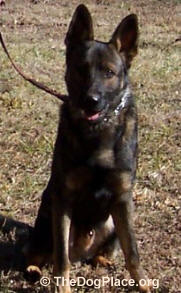
The colors tend to be much stronger with even some blacks in the German working style GSD. Most are fairly large, heavy boned, and impressive.
They are what I see as the RinTinTin type of Shepherd. These guys have an unequaled work ethic. They are bred for border patrol and police work and excel in both. The kindness and consistency with which this type is trained determines his behavior. If treated with kindness they will be kind, if treated harshly they will be harsh in return.
Often seen as being aggressive but that is far from the truth in most of this type. STRENGTH OF CHARACTER IS PARAMOUNT.. Strong nerves combined with great trainability make the German Shepherd Dog a candidate for all types of police, search and rescue, and guide dog work. This is the type of dog who would willingly lay down his life for you, while lovingly guarding your child or elderly parent.
Photos courtesy of Kathy Wilcox Photography - Dogs and research background courtesy Joan Ronalder, Vom Ron German Shepherds. www.vomrongermanshepherds.com
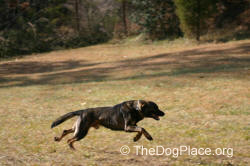
Below are shots of Czech GSD imports in training
TheDogPlace.org EST 1998 © 2008-1661712182 https://www.thedogplace.org/Breeds/German-Shepherd/Four-Shepherd-Types_Cordingley.asp SSI
SSI Advertising ~ Disclaimer ~ Mission ~ Privacy
ii NetPlacesNetwork ~ ii Health Disclaimer
Brought to you by the NetPlaces Network
TheDogPlace.org, world’s 1st public website, 1st online dog news, TheDogPress.com, and TheJudgesPlace.com, 1st AKC dog judges site
|
 The
German Shepherd dog is a breed most of us know well, but do we really know them
at all? There are four distinct styles of German Shepherds and they are as
different from one another as are donkeys and zebras. They all have erect
ears, most are black and tan, black and red, or sable, all have long tails, but
there the similarities end.
The
German Shepherd dog is a breed most of us know well, but do we really know them
at all? There are four distinct styles of German Shepherds and they are as
different from one another as are donkeys and zebras. They all have erect
ears, most are black and tan, black and red, or sable, all have long tails, but
there the similarities end. Next is the American Show Shepherd. These are elegant dogs with sloping toplines and very well angulated front and rear. They are judged heavily on
sidegate and topline. In the main, most of the aggression has been bred out of
these dogs. An aggressive dog does not do well in the showring. There are show
shepherds that have obedience titles but very few with protection titles, i.e. Schutzhund.
They make impressive show dogs and nice pets but have a distinct tendency to be
nervous and timid. There is a loose lead temperament test in the showring but
more of the dogs have to be trained past timidity than past aggression.
Next is the American Show Shepherd. These are elegant dogs with sloping toplines and very well angulated front and rear. They are judged heavily on
sidegate and topline. In the main, most of the aggression has been bred out of
these dogs. An aggressive dog does not do well in the showring. There are show
shepherds that have obedience titles but very few with protection titles, i.e. Schutzhund.
They make impressive show dogs and nice pets but have a distinct tendency to be
nervous and timid. There is a loose lead temperament test in the showring but
more of the dogs have to be trained past timidity than past aggression.  The
third type is the German
show Shepherd. They basically adhere to the famous quote of Max von Spephanitz,
“Above all, keep my dog a working dog.” Most of this type are black and red,
some black and tan. They have a different topline than the American show type
but are also judged heavily on side-gait. Long coated shepherds may come from
German show lines.
The
third type is the German
show Shepherd. They basically adhere to the famous quote of Max von Spephanitz,
“Above all, keep my dog a working dog.” Most of this type are black and red,
some black and tan. They have a different topline than the American show type
but are also judged heavily on side-gait. Long coated shepherds may come from
German show lines. Clean movement, not cow hocked, is much valued in this type
which often has a roached or curved backline, not the straight and sloped of the
American show shepherd nor the straight and level back of the American generic
shepherd or the working style.
Clean movement, not cow hocked, is much valued in this type
which often has a roached or curved backline, not the straight and sloped of the
American show shepherd nor the straight and level back of the American generic
shepherd or the working style. The working type
German Shepherd Dog is mostly either Czech or East German in origin.
These dogs tend to be more what the founder of the breed, Max Von Stephanitz, had in mind when the
breed was created.
The working type
German Shepherd Dog is mostly either Czech or East German in origin.
These dogs tend to be more what the founder of the breed, Max Von Stephanitz, had in mind when the
breed was created.  Many are dark, either sable or black and tan, some
appear all black. They are
somewhat lighter in bone and shorter backed than the other types. Smaller
ears and less overall exaggeration.
Many are dark, either sable or black and tan, some
appear all black. They are
somewhat lighter in bone and shorter backed than the other types. Smaller
ears and less overall exaggeration.